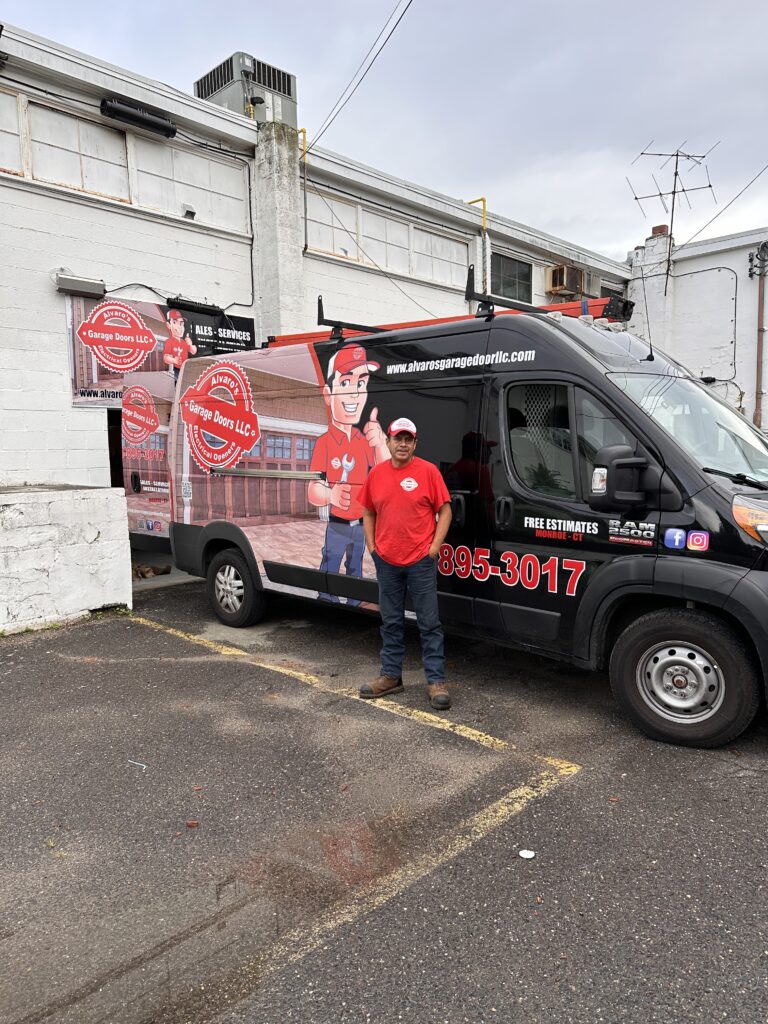
The five warning signs that your garage door needs professional repair are unusual noises during operation, slow or uneven movement, visible damage or rust on panels and hardware, increasing energy bills with no other explanation, and a door that won’t stay open or closed. I’m Patrick Alvaro, owner of Alvaro’s Garage Doors in Monroe, CT, and I’ve been diagnosing these problems across Fairfield County since 2017. Catching them early saves you money and keeps your family safe.
1. Why Is My Garage Door Making Unusual Noises?
A garage door that suddenly starts grinding, squealing, popping, or banging is telling you something is wrong. Different noises point to different problems. A high-pitched squealing usually means metal rollers are worn out or the hinges need lubrication. Grinding sounds often come from a track that’s bent or misaligned, forcing the door to scrape as it moves. A loud bang or pop, especially first thing in the morning in cold Connecticut weather, can signal a spring that’s about to break or has already snapped. Rattling noises may mean loose hardware, including bolts, brackets, or the opener chain. I tell homeowners across Monroe, Trumbull, and Shelton to pay attention to any new sound because your garage door shouldn’t change its voice without a reason. Most noise-related repairs cost between $100 and $400 and take under two hours to complete.
How Urgent Are Garage Door Noises?
The urgency depends entirely on the type of noise. A loud bang followed by the door refusing to open is a high-urgency situation, almost always a broken spring, and you should call a professional immediately. Grinding or scraping noises are moderate urgency. Squealing and squeaking are lower urgency and sometimes fixable with lubrication. When in doubt, call (203) 895-3017 and describe what you’re hearing.
2. Why Is My Garage Door Moving Slowly or Unevenly?
A garage door that hesitates, jerks, moves slower than usual, or rises unevenly with one side higher than the other has a mechanical problem that will get worse over time. Slow movement often points to worn-out springs losing their tension, a failing opener motor, or rollers that are binding in the track. Uneven movement, where one side of the door lifts before the other, typically means a cable has stretched or slipped off its drum on one side, or one spring is weaker than the other. This is not a problem to ignore. An uneven door puts asymmetric stress on the entire system.
Can I Fix Slow Garage Door Movement Myself?
Some causes of slow movement are safe to address yourself. Start by visually inspecting the tracks for debris, ice buildup, or obvious bends. Clean the tracks with a damp cloth and lubricate the rollers and hinges with a silicone or lithium-based spray. If these steps don’t solve the problem, the issue is likely with the springs, cables, or opener motor, and those are not DIY repairs.
3. What Does Visible Damage or Rust Mean for My Garage Door?
Visible damage on your garage door, whether it’s dents, cracks, rust spots, or peeling paint, is more than a cosmetic issue. Dented panels can interfere with the door’s ability to travel smoothly in the track. Rust on steel doors starts small but spreads quickly in Connecticut’s humid summers and salt-laden coastal air. I recommend inspecting your garage door panels, hardware, and weather seals at least twice a year, once in spring and once in fall. Catching a small rust spot early means a $50 touch-up rather than a $400 panel replacement. If you see any damage, call us at (203) 895-3017 for a free assessment.
How Urgent Is Garage Door Rust or Panel Damage?
Urgency varies by severity. A single small dent with no impact on door operation is low urgency but should still be monitored. Rust is deceptive and can spread to a structurally compromised area within a year if left untreated. Any damage that prevents the door from sealing fully is high urgency.
4. Can a Garage Door Cause Higher Energy Bills?
Absolutely. If your energy bills have crept up and you’ve ruled out other causes, your garage door may be the culprit. An aging, uninsulated, or poorly sealed garage door lets cold air pour into your garage during Connecticut winters. Worn weather seals along the bottom, sides, and top of the door are common energy thieves. Replacing weather seals costs $75 to $200. If your door is uninsulated, upgrading to a door with R-16 insulation can keep your garage 10 to 20 degrees warmer in winter.
When Should I Replace My Garage Door for Energy Savings?
If your garage door is more than 15 to 20 years old, uninsulated, and showing other signs of wear, replacing it will likely save you more than continuing to patch it. A new garage door is one of the highest-return home improvement projects, often recouping 90 percent or more of its cost in resale value.
5. Why Won’t My Garage Door Stay Open or Closed?
A garage door that drifts down after you open it or reverses back up after closing is a safety hazard and needs immediate attention. If the door won’t stay open, the springs have likely lost tension and can no longer support the door’s weight. If the door reverses when closing, the photo-eye safety sensors may be misaligned, dirty, or blocked. I treat any door that won’t hold its position as a high-urgency repair because of the injury risk.
Is a Garage Door That Won’t Stay Closed Dangerous?
Yes, and it’s both a safety and a security issue. A door that won’t close fully leaves your home vulnerable. If the sensors look fine and the door still won’t close, do not try to override the safety system. Call a professional. Reach us at (203) 895-3017.
When Should You Call a Professional for Garage Door Repair?
As a general rule, call a professional any time the problem involves springs, cables, tracks, or the opener motor. Simple tasks like lubricating rollers, tightening visible bolts, or cleaning photo-eye sensors are safe for most homeowners. But if you’ve tried the basic fixes and the problem persists, or if any of the five warning signs in this article are present, it’s time to call someone who does this every day. Call Alvaro’s Garage Doors at (203) 895-3017 and let’s figure out what your door is trying to tell you.
Garage Door Service Across Fairfield County
Alvaro’s Garage Doors provides the same honest, reliable service to homeowners throughout Fairfield County and beyond. Whether you need a repair, replacement, or new installation, we offer free estimates and same-day service from our Monroe shop.
- Garage Door Repair Monroe, CT (Home Base)
- Garage Door Repair Trumbull, CT
- Garage Door Repair Shelton, CT
- Garage Door Repair Fairfield, CT
- Garage Door Repair Stratford, CT
- Garage Door Repair Easton, CT
- Garage Door Repair Danbury, CT
- Garage Door Repair Westport, CT
- Garage Door Repair Norwalk, CT
- Garage Door Repair Greenwich, CT
- Garage Door Repair Stamford, CT
- Garage Door Repair Ridgefield, CT
Call (203) 895-3017 for a free estimate today.
Garage Door Service Across Fairfield County
Alvaro’s Garage Doors provides the same honest, reliable service to homeowners throughout Fairfield County. Whether you need a repair, replacement, or new installation, we offer free estimates and same-day service from our Monroe shop.
- Garage Door Repair Monroe, CT (Home Base)
- Garage Door Repair Trumbull, CT
- Garage Door Repair Shelton, CT
- Garage Door Repair Fairfield, CT
- Garage Door Repair Stratford, CT
- Garage Door Repair Easton, CT
- Garage Door Repair Danbury, CT
- Garage Door Repair Westport, CT
- Garage Door Repair Norwalk, CT
- Garage Door Repair Greenwich, CT
- Garage Door Repair Stamford, CT
- Garage Door Repair Ridgefield, CT
Call (203) 895-3017 for a free estimate today.